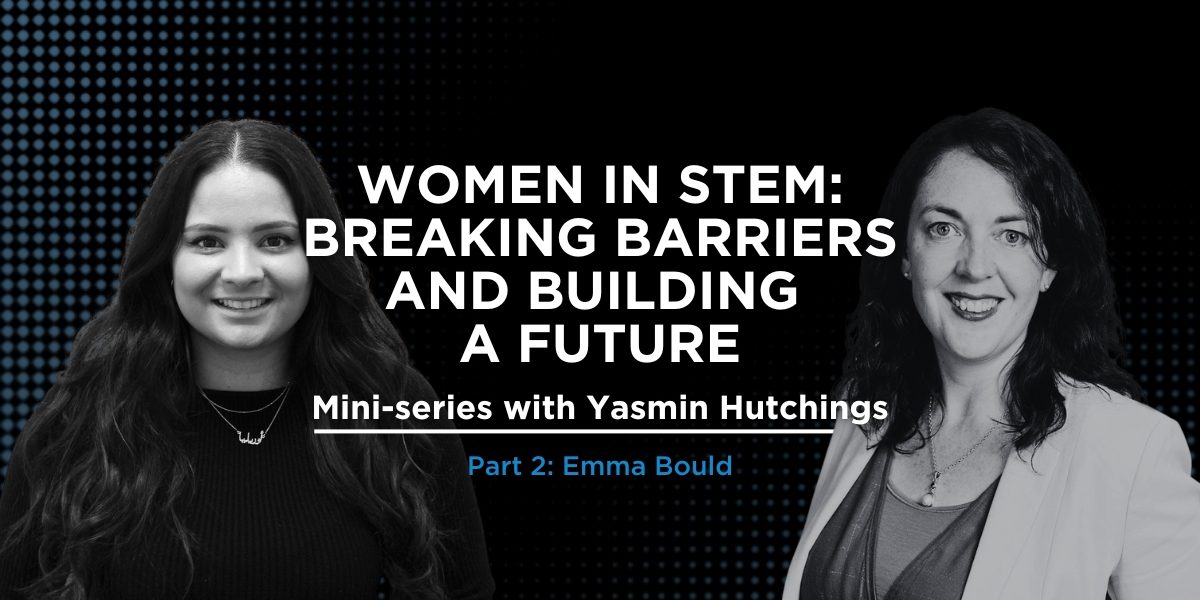
In the next instalment of our Women in STEM blog series, I had the pleasure of sitting down with Emma Bould. An incredible leader in life sciences who offered some great advice for those looking to enter the industry and become successful. Emma Bould, who has had a remarkable career spanning engineering, the Navy, and life sciences, exemplifies how women can break through the barriers. In our recent interview, Emma shared insights about her experiences, offering valuable lessons for women pursuing STEM careers.

Navigating diverse career paths
Emma Bould’s journey is anything but linear. She began her career in engineering, completed a degree in New Zealand, and then moved to the UK, where she joined the Royal Navy. Reflecting on her journey, Emma mentioned that early days, she always had a plan but emphasized the importance of staying open to new opportunities. “I was clear that I wanted to be an engineer and I wanted to join the Navy. Beyond achieving my Chartership, I wasn’t sure what was next. I think it’s important to have a direction, but also to be open to exploring other possibilities,” she said.
Her openness to new roles and experiences led her to transition from the Navy into construction and then the life sciences industry, where she has worked at major companies like GSK. This adaptability is a vital lesson for women in STEM fields, particularly given the diversity of careers that STEM qualifications can open up.
Overcoming gender barriers
One of the constant challenges Emma encountered throughout her career was the gender imbalance in engineering and operational workplaces. “I was almost always the only woman in my engineering class, and that continued when I started working,” she said. This experience of working in male-dominated environments is common for many women in STEM, which can make you feel very visible.
Despite these challenges, Emma has remained resilient and determined to succeed. She highlighted the importance of developing confidence and a sense of competence early on. “I felt like I had something to prove,” she said. This mindset helped her push through some challenging situations, not only being one of the few women in her field but also overcoming systemic issues and bias within the organizations in which she worked.
Emma’s reflections also underscored the importance of mentorship and sponsorship in helping women succeed. While mentorship offers guidance, sponsorship is about actively advocating for someone’ when they are not present, and it has a huge influence on a person’s career advancement. Emma noted that having both was critical for her and it continues to be important to have allies with a seat at the table in , environments where women are still often underrepresented. She also encouraged companies to invest in formal leadership training for all employees, regardless of gender, to help increase understanding and awareness of how to level the playing field.
Balancing work and personal life
One of the primary issues facing women in STEM, especially in mid-career, is the challenge of balancing work and family life. Many women have a priority shift from their careers temporarily to raise children, and returning to work can feel overwhelming, particularly in fast-paced, rapidly evolving fields where STEM skills are often required. Emma spoke about how this issue affects career trajectories for many women and also contributes further to the gender pay gap.
In her MBA dissertation, Emma focused on the lack of women in engineering leadership and the factors that contribute to this, known as the “leaking pipeline”. Through interviews and focus groups, she identified that many women leave STEM careers during mid-career, often because of a lack of flexibility in working options. “Engineering hasn’t traditionally been structured to accommodate part-time roles or job shares. With paternity leave and shared parental leave being relatively recently introduced the engineering profession hasn’t been driven to modernise as quickly as others, which can make it more difficult for women to return to engineering roles after maternity leave,” she explained.
However, Emma remains hopeful that change is on the horizon. “I think we’re seeing a shift. The more men takingparental leave, the more the gender norms around caregiving break down.” For Emma, supporting men in taking an active role in childcare can alleviate some of the burdens women traditionally face and help retain women in STEM fields.
Emma stresses the need for more organizations to challenge themselves to think differently and offer flexibility, especially in industries where women are vastly underrepresented.
Mental health and wellbeing
Another significant theme from my discussion with Emma was the importance of mental health. She candidly discussed the periods of burnout she experienced, especially during some of her most demanding roles. “I hit rock bottom at one point, and had no idea what was wrong with me. It was a huge learning experience. I realized how important it is to take care of your mental health and identify the early warning signs,” she stated.
In STEM careers, where high-pressure environments and long hours are often the norm, managing stress and avoiding burnout is crucial for long-term success. Emma learned to set boundaries, ask for help, and take time off when needed. “It’s easy to fall into the trap of thinking that you have to do everything perfectly, but that’s just not sustainable.”
Her message to women in STEM is clear: taking care of your mental health is not a sign of weakness but a sign of strength. She advocates for building a strong support network at work and at home and ensuring that mental wellbeing is a priority for both individuals and organizations.
Leadership and career growth
One of the key components of Emma’s success has been her leadership skills, which she honed during her time in the Navy. She spoke about the importance of leadership training, particularly in operational roles. “Leadership is about getting the best out of your people and identifying how you can enable them to be successful,” she emphasized.
Throughout her career, Emma has found that strong leadership can make or break an organization. During her career and in her most recent role as an advisor, she has observed the root cause of many of the productivity issues; employee dissatisfaction, engagement and retentionoften boil down to poor leadership. Emma’s military background gave her a unique perspective on leadership, particularly in high-stress, high-stakes environments.
Emma also highlighted the need for companies to invest in the leadership development of women in STEM. She argued that it’s an important part of driving equity and when companies fail to nurture female leaders, they are missing out on the diversity of thought and perspective that women bring to the table.
Advice for women entering STEM
Emma offers three key pieces of advice for women starting their careers in STEM:
- Trust your instincts: Your instincts often reflect your values. If something feels wrong, take the time to reflect on why that is and act accordingly.
- Be brave: Don’t let self-doubt hold you back. Being brave and taking risks is essential to career growth and while that can feel uncomfortable, taking the easy road is you holding yourself back.
- Embrace opportunities: Stay open to new opportunities, even if they weren’t part of your original plan. Sometimes, the best career moves come from unexpected places.
Emma Bould’s career is a testament to the resilience, adaptability and determination needed to succeed as a woman in STEM. Her journey offers valuable lessons not just for women in these fields but for any individual seeking to overcome barriers and thrive in their careers.